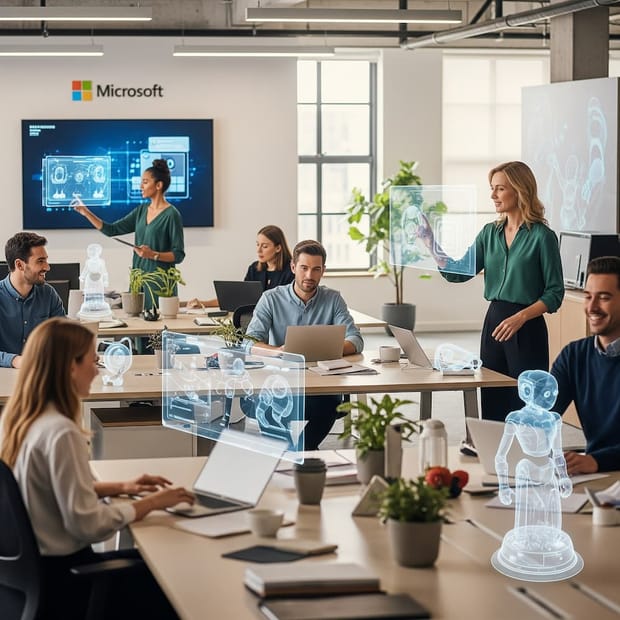
Artificial intelligence is no longer a futuristic technology; it's here, and it's at the core of how we work. This is the unequivocal message Microsoft has sent to its employees via an internal memo, which quickly made waves across the tech world. The directive is clear: the use of AI tools, particularly GitHub Copilot, is no longer optional and will be a determining factor in performance reviews.
AI at the Heart of Performance
According to the memo, signed by Julia Liuson, President of Microsoft's Developer Division, AI proficiency is now considered a fundamental part of work, on par with communication and collaboration. This means managers have been instructed to evaluate employees based on their ability to adopt and effectively use AI tools. This is a significant shift, transforming AI from an "extra" into an essential competency.
This move isn't coincidental. Microsoft is aggressively pushing to increase the internal adoption of its AI services and products. In an increasingly competitive market where AI innovation is progressing at a dizzying pace, the company wants to ensure its employees are at the forefront of using its own solutions. The goal is clear: to demonstrate the power and effectiveness of their AI tools starting from within.
GitHub Copilot: The New Work Companion
At the heart of this internal revolution is GitHub Copilot, the AI-powered programming assistant that suggests code and functions in real-time. For Microsoft developers, integrating Copilot into their workflow will become the norm. But the impact won't be limited to just code; it's likely that adoption will extend to all of Microsoft's AI tools, influencing every aspect of daily work.
This strategy reflects a broader vision: AI isn't just a tool to improve productivity, but a catalyst for innovation. By making AI mandatory, Microsoft is pushing its teams to explore new work methodologies, optimize processes, and free up valuable time for more complex and creative tasks.
Challenges and Opportunities for Employees
A change of this magnitude isn't without its challenges. Some employees have expressed concern about the accelerated pace of introducing these new technologies and the need for adequate training. It's crucial that Microsoft provides the necessary support to ensure that all employees, regardless of their initial skill level, can acquire the required capabilities.
However, these challenges are also opportunities. For tech professionals, mastering AI tools isn't just an internal requirement, but an investment in their professional future. AI is redefining the job landscape, and anyone who can harness its potential will have a significant advantage.
The Future of Work: A Lesson for All
Microsoft's move sends a strong signal to the entire tech industry and beyond. Companies that don't embrace AI risk falling behind. Integrating AI into the organizational fabric is no longer a luxury, but a strategic necessity.
For other businesses, Microsoft's lesson is clear: it's time to assess how AI can be integrated into their workflows, invest in employee training, and prepare for a future where artificial intelligence will no longer be an option, but an indispensable component of success. The AI revolution is in full swing, and the time to participate is now.