In the fast-paced world of artificial intelligence, Microsoft has unveiled a groundbreaking development that promises to enhance how machines tackle mathematical problems. Known as the RStar technique, this innovative approach equips smaller AI models to perform on par—or even surpass the capabilities—of larger models from competitors like OpenAI.
Understanding RStar: The Next Leap in AI Model Efficiency
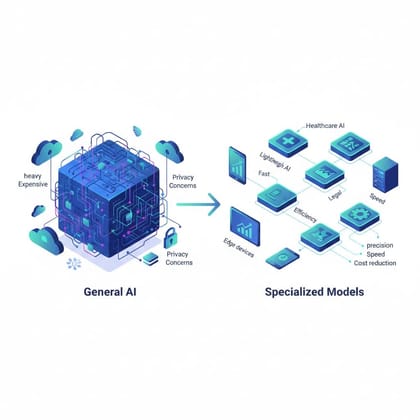
Microsoft's RStar method aims to address a recurring challenge in AI: balancing model size with computational efficiency. As AI becomes integral to various applications, from education to complex scientific computations, the ability to process information quickly and accurately is paramount. RStar empowers smaller models by optimizing algorithm design, thereby enhancing their performance without requiring extensive computational resources.
Competing with the Giants: A Comparative Edge
Traditionally, larger AI models have been seen as more capable when solving intricate problems, primarily because they have a vast data-processing capacity. However, Microsoft's latest innovation allows smaller models to close the gap by fine-tuning their architectures. Early tests indicate that AI systems utilizing the RStar technique outperform OpenAI's O1 preview models in a variety of math problem scenarios. Such advancements highlight Microsoft's continued commitment to pushing the frontiers of AI capabilities.
Implications for the Tech Industry and Beyond
- Cost Efficiency: By enabling smaller models to achieve greater results, companies can reduce operational costs associated with deploying and managing large-scale AI systems.
- Accessibility: Smaller models that perform well can be integrated more easily into consumer-grade devices, making advanced AI applications more accessible to the average user.
- Energy Consumption: Efficient models contribute to decreased energy consumption, aligning with global efforts to create more sustainable technology practices.
The Road Ahead: What This Means for AI Development
The introduction of the RStar technique points to a future where AI efficiency and power are no longer dictated by size. Smaller and smarter models could redefine sectors that rely heavily on AI for rapid calculations and problem-solving, such as financial analysis, climate modeling, and advanced machine learning systems. Additionally, this could foster further innovation as companies look to refine and expand upon Microsoft's pioneering design.
As the tech industry continues to evolve, staying abreast of these advancements is crucial. Microsoft's RStar is more than just an enhancement; it represents a pivotal shift toward smarter, leaner AI solutions capable of shaping the future of artificial intelligence. With such technologies emerging, the potential to redefine the landscape of digital transformation is enormous, benefiting both industries and everyday users.
AI enthusiasts and industry professionals will undoubtedly be watching closely as Microsoft continues to develop and expand the capabilities of its AI models, with the RStar technique at the forefront of these innovations.